OPEN FIGURES
Affective-touch recordings
Review microneurography traces, receptive fields and pleasantness curves in the Frontiers article. CC BY; figures remain with the article.
Explore ↗PACKAGE AAN-F-003 · EVIDENCE EDITION
Why one fabric can feel settling today and unbearable tomorrow, and why the answer lives in an encounter among textile, garment, body and world.

THE SHORT ANSWER
Your nervous system builds the feel of a fabric. One material name cannot hold it. Receptors encode deformation, vibration, temperature, movement and potential harm; the brain interprets those signals alongside expectation, attention, prior experience and present conditions.
Map an actual garment →01
A sleeve is never simply “soft.” It has fibers, yarn, construction, finish, seams and weight. It meets a particular patch of skin with a particular pressure, temperature, speed and duration. Then movement keeps rewriting the contact.
Fast, myelinated Aβ afferents help the nervous system discriminate pressure, vibration, edges and texture. Unmyelinated C-tactile afferents contribute to the affective quality of gentle moving touch on hairy skin. Pain and itch pathways add other messages. These systems interact; none is a universal comfort meter.
A fiber label names ingredients. It does not predict an experience.
Mechanism review: Liljencrantz & Olausson, Frontiers in Behavioral Neuroscience (2014). Open article and figures ↗
TEXTILE ≠ GARMENT
“Cotton” leaves out yarn twist, weave, surface finish, laundering, moisture and every construction detail. A seam can concentrate force. A label can repeat the same stimulus hundreds of times. A loose garment can flutter; a fitted one can maintain pressure. The same shirt changes after sweat, heat, washing or a long day.
A 2024 textile-touch study found that measured tactile sensitivity influenced how participants rated textile textures. Its task used hand touch in a laboratory, which differs from full-body wear. Even so, it undercuts the idea that everyone meets one objective softness.
Mehta et al., “Tactile sensitivity alters textile touch perception” (2024). Open access ↗
02
Steady pressure, predictable contact, low friction or familiar weight may feel organizing to one person. The same pressure may feel entrapping, painful or too hot to another. Small studies of compression and sensory garments do not support universal therapeutic claims.
Context also changes touch. Expectation and attention can alter pleasantness; an acceptable seam at home may become impossible under fluorescent light, time pressure and crowded transit. “Today” is a real variable. It does not mean the person is inconsistent.
Evidence boundary: Lawson et al. (2022) and Grandits et al. (2023). Sensory-garment study ↗ · Compression study ↗

THE OBJECT LESSON
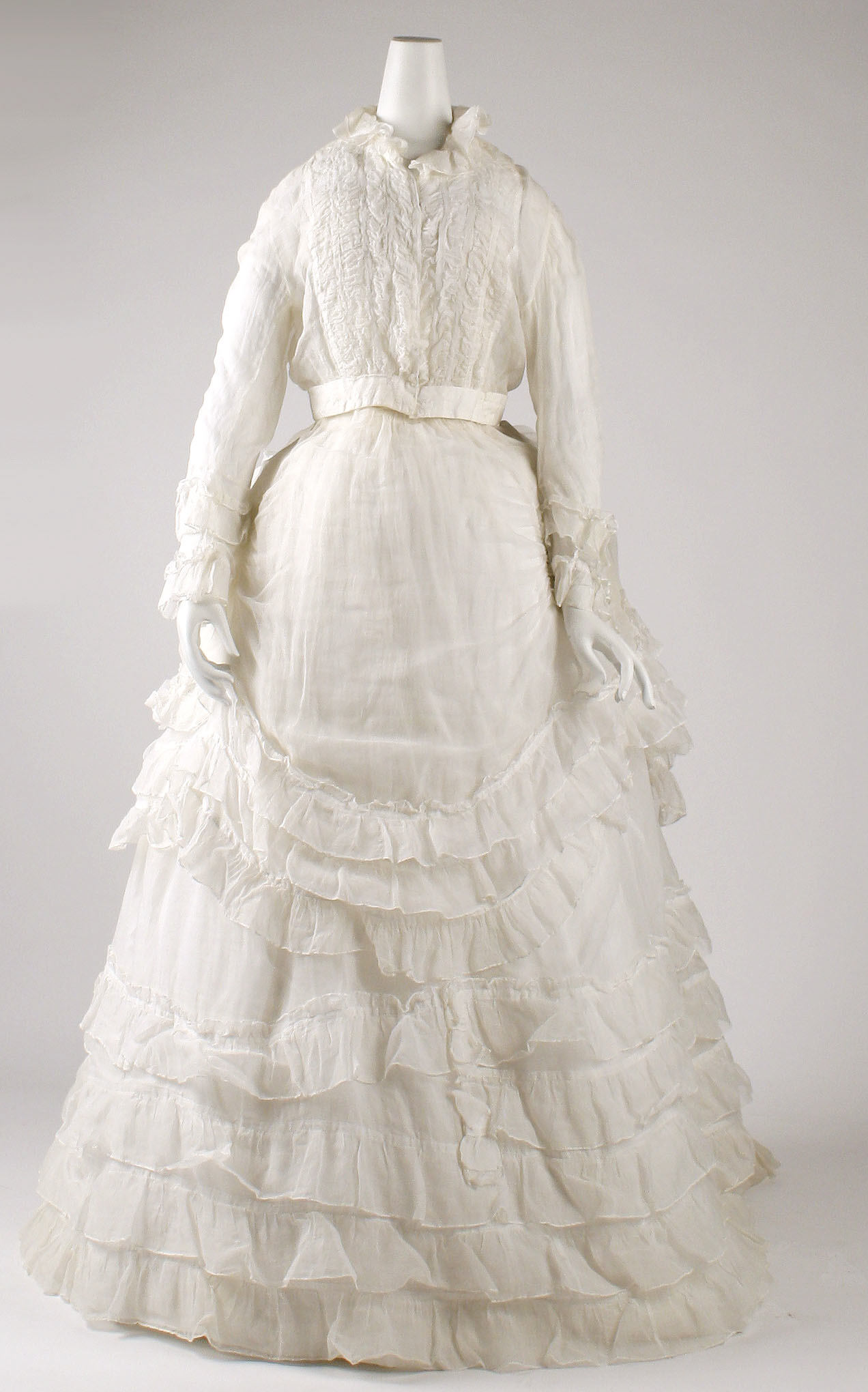
The photograph records form and leaves out feel. It lets us inspect fitted construction, high neck, fringe, gathers, closures and layers. It cannot tell us the weave’s hand, the lining, the wearer’s temperature or the accumulated sensation after an hour.
This is why sensory fashion needs object records plus first-person wear records. Luxurious material names are a poor guide.
03
In a mixed-methods study of ten autistic adults, Kyriacou and colleagues documented tactile defensiveness, positive sensory experiences, restricted clothing choices and effects on identity and participation. Some participants described seams, labels or disliked fabrics as distressing; others sought particular sensations.
The finding is variability. It does not produce an “autism wardrobe.” Autism does not make every person prefer cotton, hate wool or benefit from compression. ADHD and autism are not interchangeable, and neither can be diagnosed from clothing preferences.
Kyriacou et al., Journal of Autism and Developmental Disorders (2023). Canonical article ↗

ITCH · PAIN · DISTRESS
Itch, pain and affective aversion are distinct experiences that may overlap. In tactile allodynia, normally innocuous moving contact, including fabric brushing skin, can produce pain. That clinical phenomenon should not be used to medicalize every strong dislike, nor should strong sensory distress be dismissed because there is no visible injury.
New, persistent or worsening pain, rash, numbness or burning belongs with a qualified clinician. This exhibition cannot determine whether a reaction comes from contact dermatitis, neuropathic pain, migraine, sensory sensitivity or something else.
04
The practical unit is the whole encounter: surface, seam, pressure, temperature, moisture, movement, duration, body site, predictability and context. Change one variable at a time when possible. Turn a garment inside out, add a soft base layer, remove a label safely, compare standing with walking, or note when heat changes tolerability.
Accommodation is not failure. Repeating a safe outfit, buying duplicates, avoiding a texture or changing dress expectations can preserve attention for the life happening beyond the clothes.
THE EVIDENCE-FITTED ANSWER
Because touch is produced by a nervous system encountering a constructed garment in context. Material properties matter, but so do seams, pressure, temperature, movement, body site, duration, expectation, prior experience, pain and individual sensitivity. No fiber is universally soothing or intolerable.
Touch uses multiple peripheral pathways; tactile sensitivity changes textile ratings; garment details and context shape experience.
A fabric diagnoses neurodivergence, compression treats everyone, or “natural” fibers guarantee comfort.
How lab texture ratings translate to hours of real wear across diverse bodies, cultures, climates and disabilities.
WATCH · EXPLORE · LEARN
OPEN FIGURES
Review microneurography traces, receptive fields and pleasantness curves in the Frontiers article. CC BY; figures remain with the article.
Explore ↗OPEN STUDY
Read participant-centered qualitative findings and the authors’ limitations. CC BY via PMC.
Read ↗OBJECT + AUDIO
Inspect high-resolution public-domain objects and curatorial metadata. Images are downloadable below.
Open object room →PACKAGE 003 CLAIM LEDGER